Emergency Water Extraction in West Covina
Standing water keeps moving into padding, baseboards and drywall until it is pulled out. Pumps, wands and vacuums remove it while the source is stopped and the drying plan is set.
(888) 563-9619Get water pumped out now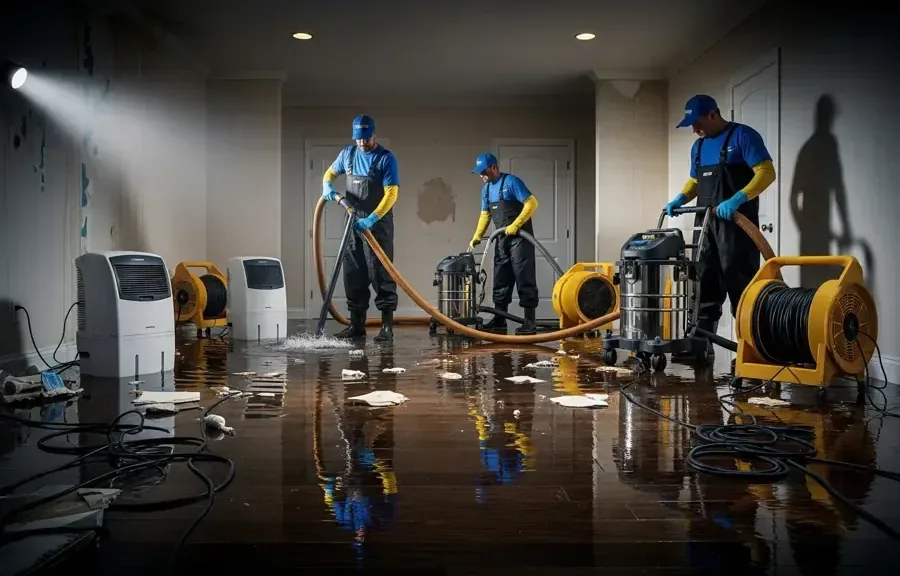
First steps for emergency water extraction
- 1
Stop the source
Close the main or fixture valve so no more water enters the building.
- 2
Check the water
Clean, gray or dirty water decides the safety gear and the method.
- 3
Pump and extract
Pumps clear the deep water, then wands lift what the floors hold.
- 4
Remove wet padding
Soaked padding and insulation leave the room so drying can reach the subfloor.
Useful details for the first call
- Which rooms are wet, and whether a unit or room below is affected
- Whether the water looks clean, gray or like sewage
- When it started and whether the shutoff is closed
How emergency water extraction is held to a standard
Dispatch at any hour
Active water is treated as urgent at night, on weekends and on holidays, with extraction gear and meters on the truck.
IICRC S500 drying
Structural drying sized to the class of loss; the equipment stays until the readings say dry.
A claim file from day one
Moisture map, daily psychrometric logs and timestamped photos taken before anything is removed.
Built for slab homes
Slab-on-grade floors, hillside lots and stacked units each hide water in different places.
What does emergency water extraction cost in West Covina, CA?
Emergency water extraction in this area typically runs $300 to $1,500 for a single room, $1,500 to $6,000 with drying added, and $6,000 to $15,000 for a large or contaminated loss. The wet area and the water category set the final figure.
Single room extraction
- One wet room, clear source
- Pumps and wands remove the water
- Moisture check at the wall base
Extraction plus drying
- Several rooms or deeper water
- Air movers and dehumidifiers
- Wet padding and baseboards removed
Large or contaminated loss
- Sewage or storm water involved
- Containment and protective gear
- Long drying with logged readings
Ranges are typical, not a quote: the water category, square footage, material class and how fast drying started move the number most. The water damage cost calculator gives a closer planning range.
How the emergency water extraction job runs
The walkthrough maps moisture before any equipment goes down, so the drying plan matches what is actually wet.
First contact
The source, the wet rooms and the water type are noted.
Extraction
Pumps and wands remove the standing water.
Drying setup
Air movers and dehumidifiers go in and wet materials are opened.
Monitoring
Readings repeat until the structure is dry.
Water that sits on a floor does not stay on the floor. It wicks into carpet padding, baseboards and the bottom of the walls, and the longer it stays, the more material has to be torn out. In West Covina the first move is the same for every property: find the shutoff, stop the source, and get the water out so drying can start on the structure itself.
What extraction involves
- The source is stopped at the main valve or the fixture
- Pumps move deep standing water out of the building
- Extraction wands lift water from carpet and hard floors
- Wet padding and soaked insulation are removed
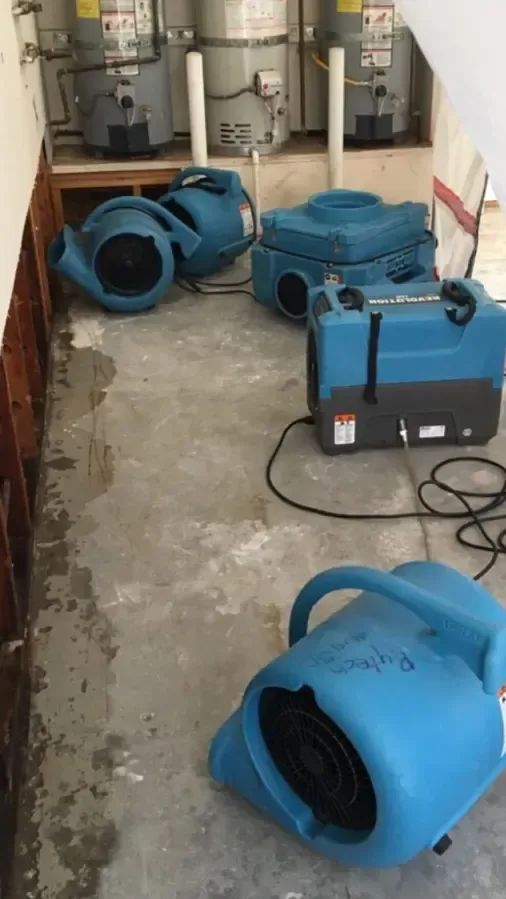
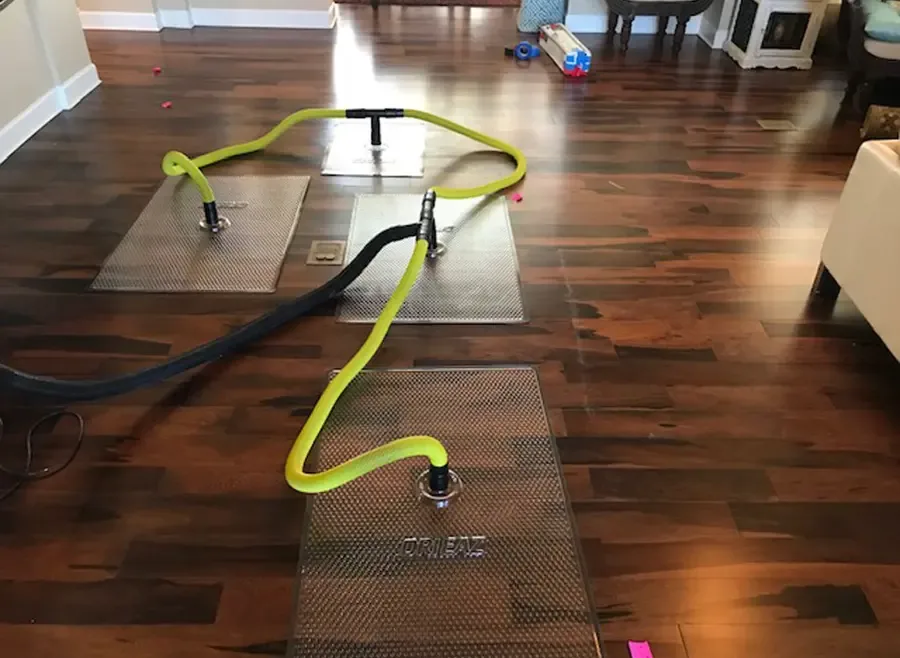
Extraction only removes the loose water, the part that can be seen and pumped. Water already inside drywall, framing and subfloor needs structural drying with air movers and dehumidifiers before the job is done.
Finding the shutoff first
Suburban Water Systems and Valley County Water District supply water to parts of the city, but the shutoff that matters during a leak is the one on the property itself. The main valve stops the whole building, and a fixture valve under a sink or behind a toilet stops a single leak. Knowing where both are saves time before any crew is on site.
When to call
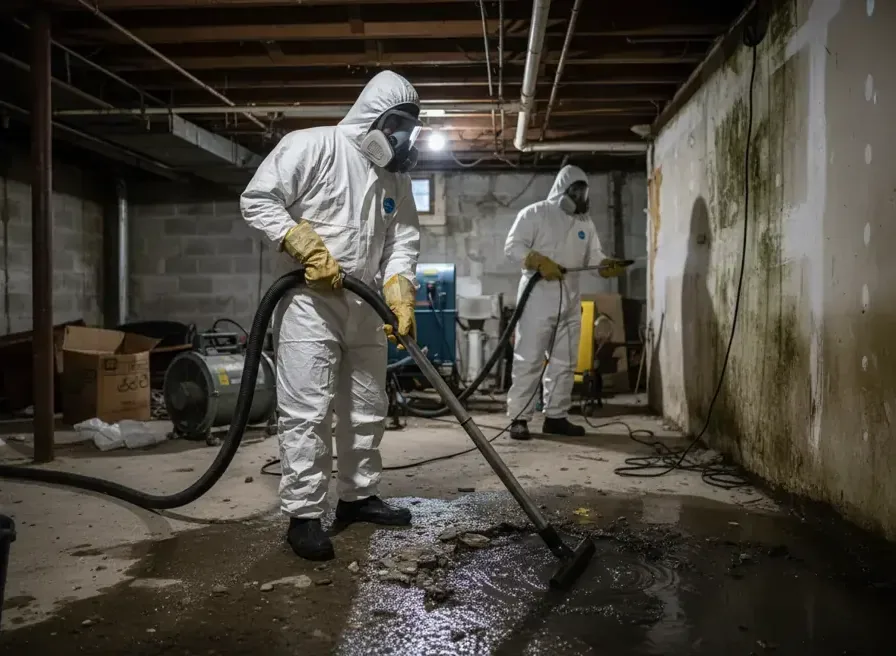
Call once water is deeper than a puddle, has touched drywall or carpet, or came from a drain. Sewage backups, storm runoff and water from an upstairs unit are never a mop job, and a crew can tell whether the loss needs sewage backup cleanup or another plan.
Emergency water extraction across West Covina and nearby communities
Extraction crews cover ZIP codes 91790, 91791, 91792 and 91793, including the areas around Woodside Village, South Hills, Cameron Park, Shadow Oak, Aspen Village and Eastland, as well as shopping centers and offices across the city.
The same service nearby: emergency water extraction in Rowland Heights, La Puente, Walnut.
Emergency Water Extraction questions in West Covina, CA
How soon should standing water be removed?
As early as possible, because water spreads into padding, baseboards and drywall the longer it sits. Removal also lowers the chance of mold, which can begin to grow within 24 to 48 hours.
Can carpet be saved after a flood?
Often, if the water was clean and extraction began early. Padding is usually replaced, and carpet is lifted, dried and checked. Contaminated water changes the answer, and carpet from a sewage loss is normally discarded.
Is extraction the same as drying?
No. Extraction removes standing water, while drying removes moisture held inside materials. Both are needed, and moisture readings show when the second part is finished.
What if the water came from a sewer drain?
That water is treated as contaminated. It needs protective gear, containment and disinfecting, and the failed pipe is checked on site before cleanup is planned.
Does a dry looking floor mean the job is done?
Not always. Moisture can stay in the subfloor and wall bases after the surface looks dry, so meters are used to confirm the materials are back to normal before equipment leaves.
Are homes and businesses both served?
Yes. Houses, apartments, shops and offices all get extraction, and larger buildings simply need more pumps, more equipment and more readings.
Water on the floor is still spreading
Extraction works best when it starts early. Call at any hour, describe the damage, and the first move is stopping the source and removing the standing water.