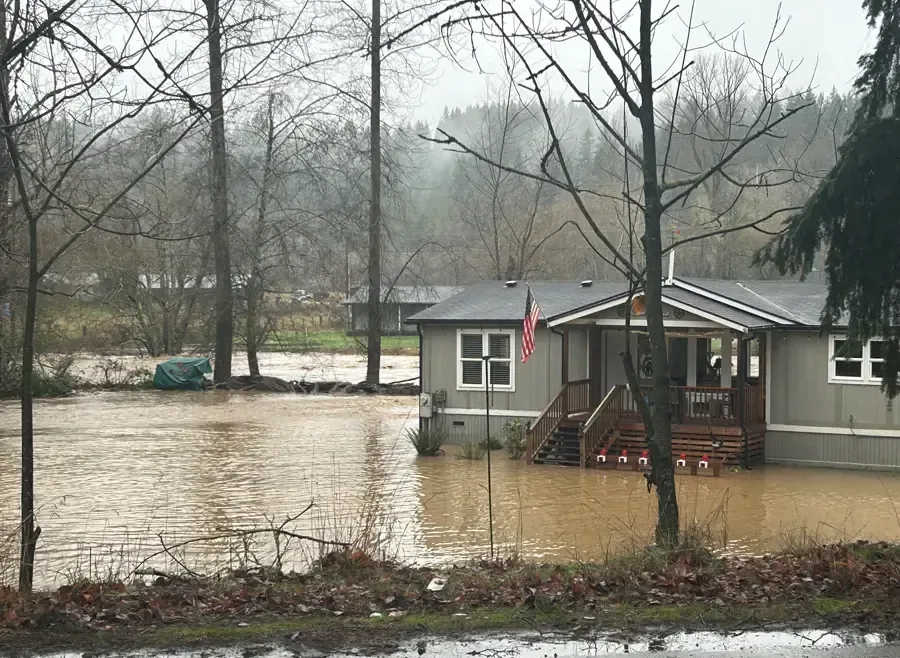
Walnut sits on the southern slopes of the San Jose Hills, with the gently sloping Puente Hills to the south. When heavy rain comes, a slope can send water and mud toward the homes below it.
Key takeaways
- The City's housing element says it has large hillside areas with slopes well over 25 percent that are susceptible to unstable soils and geologic conditions.
- The same document says landslides have occurred in some of the steeper hillside areas.
- Snow Creek and Lemon Creek run mostly south toward San Jose Creek, and rain averages 17.32 inches a year, with February the wettest month at 4.76 inches.
- Mud and runoff are treated as contaminated, so extraction and removal of soaked porous materials come before drying.
- A slope that moved or a wall that cracked is a safety question first.
The hills behind the homes
The City's housing element describes large hillside areas with slopes well over 25 percent. It says those areas are susceptible to unstable soils and geologic conditions.
It also says landslides have occurred in some of the steeper hillside areas. Snow Creek and Lemon Creek run mostly south toward San Jose Creek, which runs west to the San Gabriel River.
For an owner, the useful point is simple. Heavy winter rain can bring runoff and soil movement toward homes.
When the rain returns
Walnut averages 17.32 inches of rain a year, and February is the wettest month at 4.76 inches. Summers are nearly rainless, with 0.09 inches in June, 0.00 in July and 0.03 in August.
After months of dry weather, a few strong winter storms do most of the work. What runoff does to a house follows a few familiar patterns.
Because the ground has been dry for months, the first runoff of the season often carries the most loose soil and debris.
A house on or below a slope sees runoff differently from a house on a flat lot. Mud and water that find a gap at a garage door or a patio slider often reach the lowest room first.
- Mud pushes under garage doors and sliding glass doors.
- Water collects on the low side of a lot and enters the lowest room.
- Debris plugs yard drains and sends water toward the foundation.
- Soaked soil against a wall can wick moisture into the bottom of the drywall.
First steps after runoff reaches a house
Safety before cleanup
Stay away from a hillside that is still moving, and stay out of any room with a bowed or cracked wall. Shut off power to wet areas only if the panel is dry and easy to reach.
Work in daylight when possible. Mud hides broken glass, nails and uneven ground.
Protect what is still dry
Lift boxes and electronics off the floor and photograph the depth of the mud and where it came in.
Soaked rugs and cardboard can stay where they are until they are photographed, since the record helps later.
- Move vehicles, tools and stored items out of the path of any more runoff.
- Keep children and pets out of the mud.
- Note the time rain stopped and when the water first appeared.
Why runoff mud counts as contaminated
Runoff carries soil, yard chemicals, oil and bacteria. Once it is inside the house it is handled more carefully than water from a clean supply pipe.
The cleanup separates what can be washed from what has to go.
Water that has sat against soil for a while can carry odor and stain into wood trim and subfloor, so washing and treating come before any drying equipment goes in.
- Carpet, pad and soaked rugs are usually removed.
- Wet insulation and the bottom section of drywall are cut back to dry material.
- Concrete, tile and sealed floors are washed, treated and dried.
- Cardboard storage and particleboard shelving are often discarded.
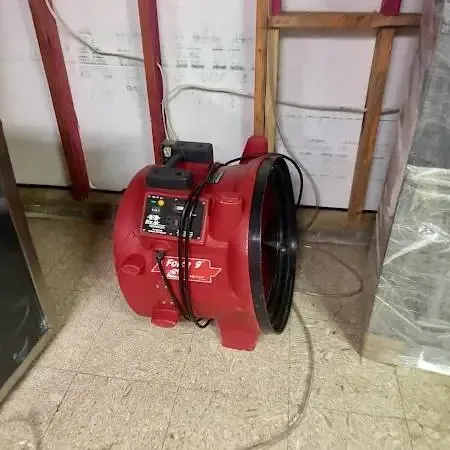
Drying a wall that stood in muddy water
A wall that stood in muddy water wicks moisture upward through the drywall paper and into the framing. The visible stain often marks only part of the wet area.
The crew cuts the drywall a short distance above the stain, removes wet insulation and lets the studs dry in open air before the wall is closed. Moisture readings on the framing decide when it is dry enough.
Cabinets and built in shelving are checked from behind, since mud and water collect in the toe space.
Mud removal, extraction and drying
Mud is heavy and abrasive, so it is removed before pumps run, which keeps it from clogging equipment and scratching floors.
Thick mud is shoveled out first, then the standing water is pulled with pumps and extractors. The water extraction service describes how that is staged in a garage or ground floor room.
After the surfaces are washed, the crew takes moisture readings and sets air movers and dehumidifiers. The storm and flood cleanup service covers the steps through to a final dry reading.
Drying continues until the wall bottoms, the subfloor and the slab return to normal readings.
Garage floors, slabs and patios are washed down with clean water and extracted again, since a thin film of silt left behind returns as dust and stains.
After the cleanup, keep water moving away
Clear yard drains, gutters and downspouts before the next storm, and watch for fresh cracks in walls or retaining walls. Storm drain systems for new subdivisions here must meet Los Angeles County Flood Control District standards, but a plugged drain still sends water where it should not go.
Soil piled against siding or stucco after a slide can hold moisture against the wall. It is cleared back so the wall can dry.
Owners can see all services on the Walnut water damage restoration hub, and the neighboring community of Rowland Heights has its own overview of storm runoff and flood cleanup.
Questions
Does Walnut have a flood history?
No local flood event is claimed here. The City's housing element does say landslides have occurred in some steeper hillside areas and that large hillside areas are susceptible to unstable soils.
Is mud from a slope really contaminated?
Runoff can carry bacteria, oil and yard chemicals along with soil. That is why porous materials it soaks are removed and the remaining surfaces are washed and treated.
Can a muddy garage floor just be hosed off?
A concrete floor can usually be cleaned, but the water has to be pulled out and the slab dried. Hosing alone can push mud into cracks and under walls.
When is a slope a safety problem?
If soil has moved against the house, a wall has cracked or bowed, or the ground is still sliding, the area should be treated as unsafe until it has been checked.
What does winter rain look like in the area?
The city averages 17.32 inches a year, with February the wettest month at 4.76 inches and nearly no rain from June through August.
Should a homeowner dig out mud before help comes?
Light cleanup to protect belongings is fine if the area is safe. Heavy mud, anything near electrical devices and any wall that looks damaged are better left to the crew.