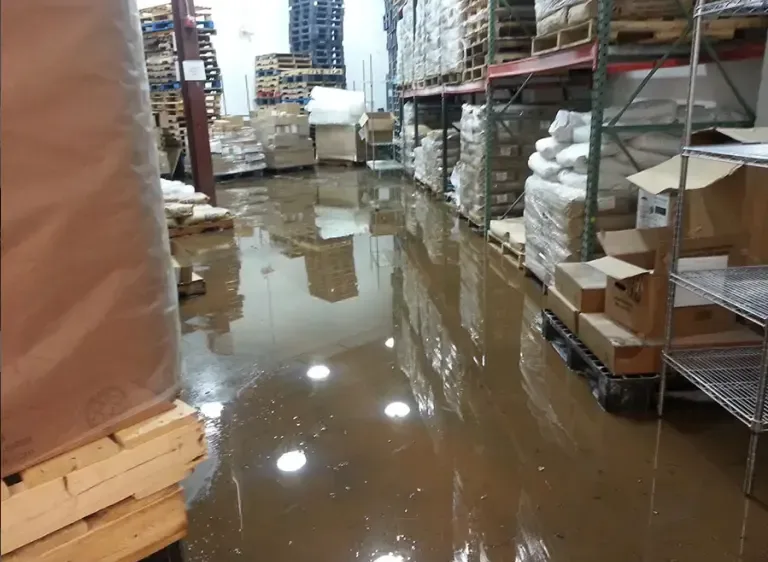
Hacienda Boulevard is La Puente's main thoroughfare, and the city still has many aging strip malls from the 1950s. In a building of side by side shops, one leak rarely stays in one suite.
Key takeaways
- Hacienda Boulevard is the main thoroughfare, and many of the city's strip malls date to the 1950s.
- Shops in a strip share walls, a roof and sometimes drains, so water from one suite can reach the next.
- A tenant shuts off what it controls, protects stock and tells the owner or property manager right away.
- An owner handles the roof, shared drains and building shutoffs, and keeps records for the insurer.
- Drying is planned around business hours, with containment and equipment placed to keep neighbors open.
Why water spreads between suites
A strip mall is built as a row of units under one roof. Walls between shops often stop at the ceiling, and pipes, wiring and ducts run across the whole building.
When water gets in from a roof, a supply pipe or a drain, it follows those paths into the next suite. The loss that starts in a salon or a restaurant can end up wetting a clinic or a store beside it.
Age adds to the risk. The city says many of its strip malls date to the 1950s, so roofs, pipes and drains have had decades to wear.
That is a general reason for care and not a claim about any one building.
An end suite with an exterior wall may see roof or wall leaks, while a middle suite is more likely to see water from a neighbor.
First steps for a tenant
A tenant can limit the damage in its own space before anyone else gets involved.
Some leases set a notice requirement for damage, so the lease is worth a quick look.
- Shut off water at the fixture or the suite valve if one exists, and stop using the affected drain.
- Turn off power to wet areas if the panel is dry and safe to reach.
- Move stock, paper records and electronics up and away from the wet floor.
- Photograph the damage and the source before anything is cleaned up.
- Tell the owner or property manager right away, in writing as well as by phone.
What the owner or property manager handles
The owner controls the parts of the building that no single tenant can reach. The city's utilities page lists four water providers, so the building's own bill shows which provider and which shutoff applies.
The owner also decides the order of repairs: stop the source, dry the building, then restore the finishes. Working in that order protects every tenant.
- The roof, flashing and gutters when rain is the source.
- Shared drains and the building's main water shutoff.
- Access to neighboring suites so the crew can check walls on both sides.
- Communication with the insurer and the other tenants.
Protecting stock, records and equipment
Inventory and paperwork are often worth more than the drywall around them.
Shelving, display cases and kitchen equipment stand in water as well. Metal can be dried and cleaned, but motors, electronics and refrigeration gear need a technician before they are switched back on.
Stock and fixtures
Lift boxes onto shelves or pallets, cover racks with plastic and keep cardboard off the floor. Wet cardboard fails quickly and stains whatever it holds.
Records and electronics
Paper files and computers are moved first. Photograph serial numbers and damage before anything is packed, since the insurer will ask for a list.
Customers and staff
Wet floors are slip hazards. Cones, signs and a dry path to the door protect customers and staff while the work goes on.
Drying around business hours
The commercial water damage service explains how a crew plans extraction and drying for a working business. The first job is pulling the standing water with the water extraction equipment.
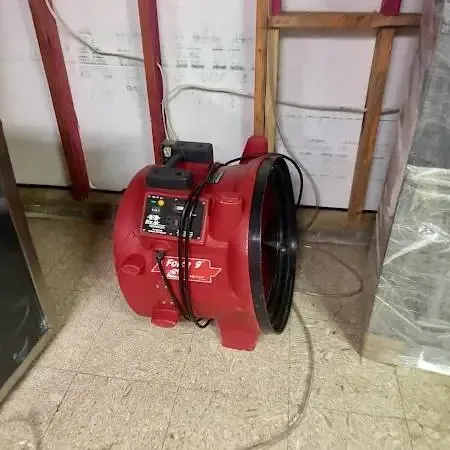
Then the crew sets containment, air movers and dehumidifiers and checks readings in walls, ceilings and flooring. The structural drying service covers how those readings decide when equipment can leave.
Work after closing can shorten the disruption, since equipment can run overnight while the shop is empty.
Ceiling tiles and insulation that got wet are removed first, because they hold water above the suite and release it onto the floor again.
- Equipment is placed to keep aisles and entrances usable where possible.
- Noise and cords are planned around customers and staff.
- Neighboring suites are checked for hidden moisture even if they look dry.
- Readings are repeated until each wall and floor matches a dry reference.
Drain and sewage backups in a shared building
A backed up drain in a strip can push dirty water into more than one suite. Sewage and drain water are handled as contaminated, so porous materials that soaked it up come out.
The city reported in January 2020 that its sewer system is more than 50 years old. That does not say where any one backup started, so the owner and a plumber sort out the source while the cleanup proceeds.
A restaurant or salon with floor drains and sinks has more routes for water than an office, which is one reason the crew inspects every drain in the suite.
Records, the lease and the next step
A lease usually says who handles repairs and who carries insurance for what. Tenants and owners both keep photos, invoices, readings and every message about the loss.
Tenants and owners should talk before work begins so one crew can plan equipment and access for the whole building.
Every service is listed on the La Puente water damage restoration hub.
Questions
Who pays for water damage in a leased shop?
That depends on the lease and on the cause. The lease usually splits the building from the tenant's contents, and each side's insurance covers its own part.
Can a shop stay open during drying?
Often a section can. Containment and equipment placement are planned to keep an entrance and part of the floor usable, depending on how far the water spread.
Why check the suites next door?
Strip mall suites share walls, ceilings and pipes, so moisture can sit behind a dry looking wall in a neighboring shop.
What should a tenant move first?
Paper records, electronics and stock that wicks water, such as cardboard and fabric, should go up and away from the floor.
Does the age of a strip mall matter?
Older buildings may have worn roofing and aging pipes, and the city says many of its strip malls date to the 1950s. The cause of a given loss still has to be checked on site.
What if the water came from a roof leak?
The owner usually arranges the roof repair, and the tenant's contents and drying are handled separately. Photos from before the repair help show how the water entered.