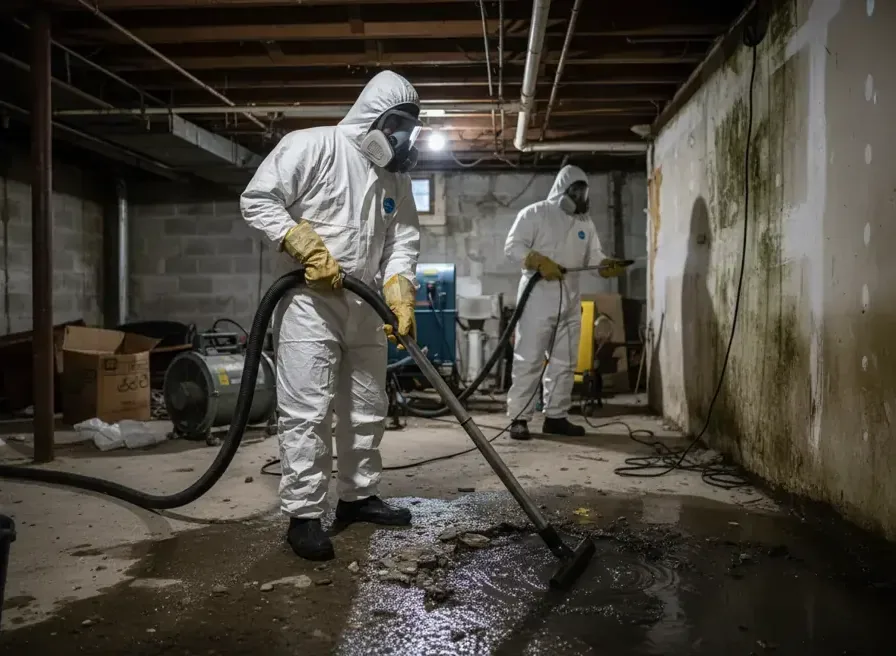
When a toilet or shower backs up, the cause is not always inside the house. In La Puente the city itself has said its sewer system is more than 50 years old, which gives owners a reason to treat any backup seriously.
Key takeaways
- In January 2020 the city reported that its sewer system is more than 50 years old, with undersized and cracked pipes.
- A multi phase repair plan began with a $16 million first phase on Glendora Avenue and Hacienda Boulevard.
- A sewage backup is Category 3 water, so porous materials that got wet are removed and not dried in place.
- The city report describes the system as a whole and does not say which pipe failed at a given home.
- Keep children, pets and fans away from the area until it has been cleaned.
What the city has said about its sewer
La Puente had 38,062 residents and 9,703 households at the 2020 Census, with an average household size of 3.92. That many people put steady demand on the pipes under the street.
In January 2020 the city reported that its sewer system is more than 50 years old. City officials described undersized sewer pipes with capacity problems and cracked, deteriorating pipes.
A multi phase repair plan was under way. Its first phase, reported as $16 million within a five year capital improvement plan, replaced mostly undersized main pipes on Glendora Avenue and Hacienda Boulevard.
The report describes the system as a whole. It says nothing about any one home's pipes, and no repair status beyond that first phase is claimed here.
Why a backup counts as Category 3 water
Sewage carries bacteria, viruses and other contaminants, so water that comes up through a drain is treated as Category 3. That is the most serious category of water damage.
The label drives the work. Porous materials that sat in the water are removed, and the hard surfaces left behind are cleaned and treated before they are dried.
Clean supply water is Category 1, and it can worsen as it sits or touches dirty materials. Sewage starts at Category 3 and stays there.
- Carpet and pad are removed and discarded.
- Drywall and insulation touched by the water are cut out.
- Baseboards, cabinet kicks and particleboard are usually thrown away.
- Concrete, tile and sealed surfaces are cleaned, treated and dried.
First steps at home
The household can protect itself and limit the spread before anyone arrives.
Chemical drain cleaners are best left alone. They do little for a blockage in the sewer pipe and add another hazard to a room that is already contaminated.
- Stop using sinks, showers, washers and toilets, since more water only adds to the backup.
- Keep children, pets and anyone with a weak immune system out of the affected area.
- Skip fans and vacuums in the room, which can spread contaminated droplets.
- Wear rubber boots and gloves if something has to be moved, and wash hands well afterward.
- Photograph the area before anything is touched.
Where a backup shows itself
Where the water comes up says something about where the blockage sits.
The lowest fixtures first
Water usually rises at the lowest opening, often a shower, tub or floor drain. Dark water, a sour smell and gurgling sounds are common signs.
More than one fixture at once
When several fixtures back up together, the blockage is more likely past the house, in the pipe that leaves the property. A single fixture that will not drain may be a simple clog in the home's own drain.
Either way, any water that has come up on the floor is cleaned as a contamination event.
Floor drains and the laundry area
A floor drain in a garage or laundry room can back up too, and the water spreads under washers, shelves and boxes. Cardboard and fabric stored there soak up contaminated water and are usually thrown away.
What cleanup and drying involve
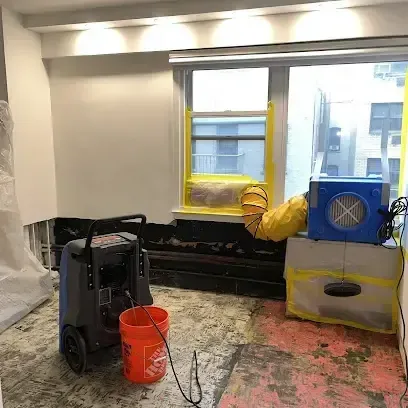
Cleanup starts with sewage backup cleanup: extraction of the water, removal of porous materials and disinfecting of what stays.
Drying follows. The crew sets air movers and dehumidifiers and checks readings until walls and subfloor return to normal levels, as described under structural drying.
Wet drywall left behind can also grow mold, so removal is not put off.
Belongings are sorted by material. Washable fabrics may be laundered, hard items are cleaned and disinfected, and porous items that cannot be cleaned are discarded.
A written list with photos helps with any claim.
Renters, owners and shared responsibility
At the 2010 Census, 60.2 percent of occupied La Puente homes were owner occupied and 39.8 percent were rented. A backup can therefore involve an owner, a tenant and a landlord at the same time.
Clear communication saves time because the person living in the home sees the damage first and the owner decides on repairs.
- A tenant reports the backup to the landlord or property manager in writing, with photos.
- An owner or landlord arranges the plumber and the cleanup without waiting for a diagnosis.
- Both sides keep copies of invoices, readings and messages.
- Belongings that were soaked are listed with photos before they are thrown away.
What the city report does not settle
A backup at one address can come from the home's own drain, from the pipe that leaves the property or from the city system. Telling those apart takes an inspection, and this post makes no claim about who owns or pays for any pipe.
The city report is useful background and not a diagnosis. A plumber's camera check or a call to the city can help sort out the source.
Every service is listed on the La Puente water damage restoration hub, and the same process is described more broadly under Category 3 water cleanup.
Questions
Is a sewer backup the same as a clogged toilet?
Not always. A clogged toilet that overflows with only clean water is a smaller problem, but water that comes up through a drain from the sewer is treated as contaminated.
Can wet carpet from a sewage backup be saved?
Usually not. Carpet and pad hold contaminants, so they are removed and replaced instead of dried in place.
Who should be called first, a plumber or a restoration crew?
Both are needed. A plumber clears or repairs the pipe that caused the backup, and the restoration crew removes the contaminated water and materials and dries the structure.
Is it safe to stay in the house during cleanup?
That depends on how far the water spread. The crew can explain which rooms to avoid, and young children, pets and anyone with a weak immune system should stay out of the affected area.
Does insurance cover a sewage backup?
Coverage varies. Some policies need a specific backup endorsement, so the policy wording or the insurer will say what applies.
Do older sewer pipes mean a backup is likely at every home?
No. The city report describes the system, not individual homes. It is a reason to stay alert and act quickly on warning signs, not a prediction for any one address.