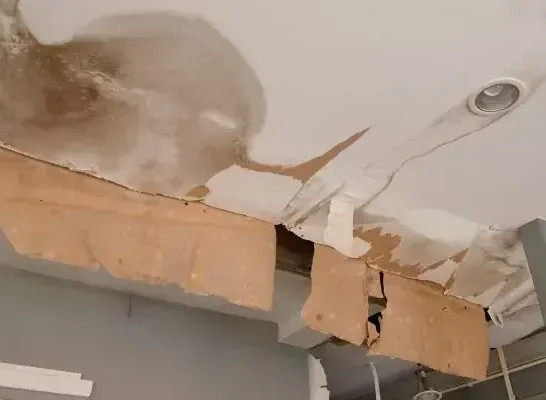
A brown ring on the ceiling after a storm raises one question right away: is the water coming from the roof or from a pipe? The answer decides who fixes the source, and it helps the drying team plan the work.
Key takeaways
- In February 2026 the National Weather Service listed West Covina among Los Angeles area places that could see flash flooding, with regional rainfall rates of 1 inch per hour or more possible.
- That was a flash flood potential listing and not a confirmed flood report.
- A stain that grows only while it rains points to the roof, and a stain that grows in dry weather points to plumbing.
- A bulging ceiling can hold a pocket of water, and draining it in a controlled way prevents a bigger collapse.
- Photos, dates and moisture readings support a claim whatever the source turns out to be.
What the February 2026 storm listing says
A powerful Southern California storm brought a flood watch to most of Los Angeles County in February 2026. The National Weather Service listed the city among places that could see flash flooding on the storm's Monday, with regional rainfall rates of 1 inch per hour or more possible.
That was a flash flood potential listing, not a confirmed local flood report, and nothing here claims that flooding happened.
It does show why ceilings get attention after a storm. Rain that falls that hard finds every weak spot in a roof, and the first sign inside the house is often a stain.
Reading the stain
Timing and location are the two best clues.
Signs of a roof leak
- The stain appears or grows during rain and stops growing when the rain stops.
- It sits below an exterior wall, a vent, a chimney or a skylight.
- The attic insulation above it is wet, flattened or discolored.
- The ceiling sags in the middle with a ring that spreads outward.
Signs of a plumbing leak
- The stain keeps growing in dry weather.
- It sits below a bathroom, laundry room or kitchen on the floor above.
- The water feels warm, or smells soapy or musty.
- The water meter moves when every fixture is off.
When the signs mix
Sometimes a roof leak drips onto a pipe or a bathroom fan duct, and the water shows up far from where it entered. When the signs point both ways, a moisture map of the ceiling and the attic tells more than guessing.
What to do while the ceiling is wet
The goal is to limit the spread and keep everyone safe until the source is found.
Do not poke at a sagging ceiling without covering the floor below and wearing eye protection. If it looks ready to drop, leave the room until a professional has looked at it.
- Move furniture and electronics out from under the stain and set out buckets or a tarp.
- If the ceiling bulges, make one small hole at the lowest point so the water drains into a bucket, and stand to the side while it does.
- Leave a wet light fixture or ceiling fan off, since water inside a fixture is an electrical hazard.
- Photograph the stain and the date, and the attic side too if it is safe to reach.
- If the stain sits under a bathroom, shut off the water to that fixture and watch whether the stain stops growing.
What the crew checks above and around the ceiling
Behind a stain the crew looks at the drywall, insulation, framing and the surface above. The ceiling leak water damage service covers opening a ceiling safely and drying the joist bays.
When the source is the roof, the roof leak water damage service covers the attic and the wet insulation. A roofer repairs the roof, and the drying team handles what the water soaked.
In a two story house, water from the attic can travel down through a ceiling into a wall and the room below. The crew checks the wall bottoms and the floor under the stain, not just the ceiling.
- Wet insulation is pulled out because it holds water against the drywall.
- Stained or sagging drywall is cut back to dry material.
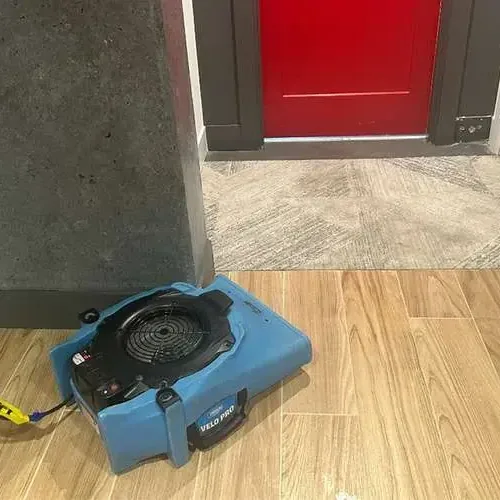
- Framing and the top of the ceiling cavity are dried with air movers and a dehumidifier.
- Readings are repeated until the area matches a dry reference.
Houses and apartments both
The Census Bureau's 2024 American Community Survey estimates about 34,652 households and 36,078 housing units here, with about 3.1 people per household. At the 2020 Census about 59.9 percent of occupied units were owner occupied, so owners and renters are both common.
That mix matters for ceilings. In a house, a roof leak is the owner's repair.
In an apartment or townhome the stain may come from the unit above, and a landlord or association needs to be told.
Apartment residents have a few extra steps: tell the landlord in writing, photograph the stain before it is touched and ask whether the neighbors above also see water.
Who fixes what
A roofer repairs a roof, a plumber repairs a pipe and the restoration crew handles the wet materials. The two repairs and the drying are easier to schedule when everyone knows the source.
The West Covina Building Division issues plumbing permits for contracted work within city limits, so a plumbing repair can bring permit questions that the contractor can answer.
Roofers often need dry weather to work, so the drying team may protect the opening with a temporary cover while the roof repair waits. That keeps the house from taking on more water between storms.
Keeping the record for a claim
Photos, the date of the storm, notes on when the stain grew and the crew's moisture readings make a claim easier to explain. Painting over the stain hides the evidence and the wet spot.
Dates matter. Note when the storm began, when the stain first showed and when the ceiling was dried.
Every service is listed on the West Covina water damage restoration hub, and a wider overview of ceiling leak cleanup covers the same steps.
Questions
How can an owner tell if a ceiling stain is from the roof or a pipe?
Timing is the biggest clue. A stain that grows only in rain points to the roof, and one that grows in dry weather points to plumbing above.
Is a bulging ceiling dangerous?
It can be. Trapped water adds weight, and a drywall ceiling can drop without warning. Draining it through a small hole while standing to the side is safer than waiting.
Should the stain just be painted over?
No. Paint hides a wet spot without drying it, and the insulation and framing above stay wet.
Was the city flooded in February 2026?
The National Weather Service listed it for flash flood potential during a powerful storm. That was a listing, and no confirmed local flood report is claimed here.
Does the attic need to be checked?
Yes. Wet insulation above a stain is the clearest sign of a roof leak, and it has to come out for the ceiling to dry.
Does homeowners insurance cover a roof leak?
It depends on the policy and the cause. Sudden damage is often treated differently from long term wear, so the policy wording and the insurer have the answer.