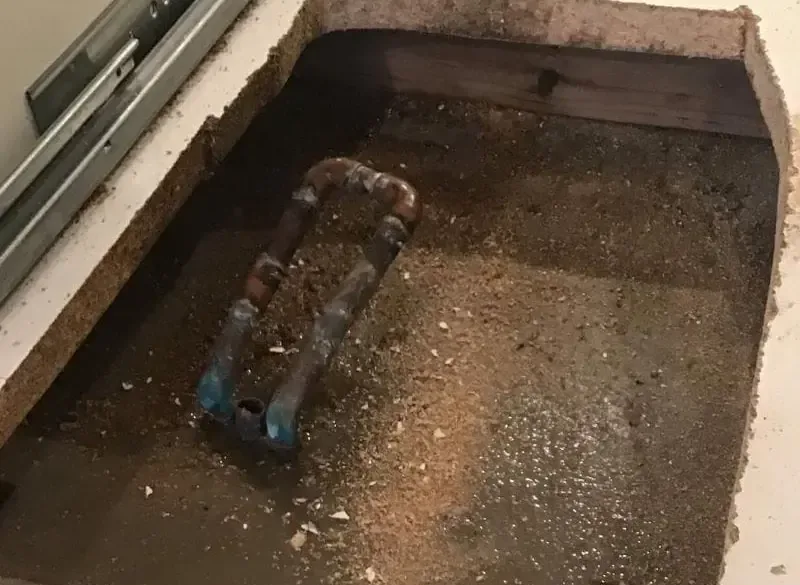
Many homes here sit on concrete slabs with copper supply pipes running under or through them. When one of those pipes leaks, the first sign is often a small change in the house and not a puddle.
Key takeaways
- A warm spot on the floor, the sound of water with every fixture off, or a meter that keeps moving can point to a leak under the slab.
- Much of this community is tract homes from the 1960s through the 1980s, and copper supply pipes run under or through the slab in many of them.
- Water under a slab wets the concrete, the flooring above and the bottom of nearby walls before anything shows on the surface.
- A plumber finds and fixes the pipe, and the drying team maps the moisture and dries the flooring, walls and slab.
- Photos and moisture readings taken during the work give the insurer a clear record.
Why slab leaks happen in tract homes
Rowland Heights is an unincorporated community in Los Angeles County, and a large share of its housing was built as tract homes from the 1960s through the 1980s. Most of those houses sit on concrete slab foundations.
In many of them the copper supply pipes run under or through the slab, and a few early houses still have galvanized pipes. A pipe that wears through down there leaks into soil and concrete instead of an open wall cavity.
Because the water has nowhere obvious to go, it travels. It can rise through cracks and joints, soak the bottom of the walls and wick into flooring a room or two away from the pipe.
Hot and cold supply pipes can both fail under a slab. The result is the same: a slow, hidden leak that grows until something gives.
Signs a pipe may be leaking under the floor
No single sign proves a slab leak, but several together are a strong hint that a plumber should look.
Hot water pipes tend to give the clearest clues, because heat carries up through the concrete.
- A floor that feels warm in one spot, even when the heat is off.
- The sound of running or hissing water when every faucet and appliance is shut off.
- A water meter that keeps moving after the whole house has stopped using water.
- Damp baseboards, a musty smell or carpet that stays wet along a wall.
- Cracked tile, lifting laminate or a wood floor that has started to cup.
- A water bill that climbs with no change in how the household uses water.
Simple checks before calling anyone
Two quick checks cost nothing and give a plumber something useful to work from.
Read the meter
Shut off every faucet, the ice maker and any sprinkler timer, then watch the small leak indicator on the meter for a few minutes. If it keeps turning, water is going somewhere.
A moving meter does not say where the water is going. A running toilet or a leaking outdoor hose bib can look the same, so those get ruled out too.
Feel and listen
Walk the floors in bare feet and press a hand along baseboards and the base of the walls. Warm, damp or soft spots are worth a photo.
Late at night, when the house is quiet, put an ear near the floor. A pipe under the slab can hiss when nothing else is running.
Compare the water bills
Set recent bills next to the same months of last year. A jump with no change in how the household uses water is one of the earliest signs, and the comparison helps a plumber judge how long the leak has been running.
What the crew does after the leak is located
A plumber or leak detection technician pinpoints the pipe and repairs it. The drying team works alongside that repair and does not replace it.
The crew maps moisture across floors and walls with a meter and a thermal camera, then marks the wet areas. The slab leak water damage service describes how that map becomes a drying plan.
- Standing water is pulled out first with water extraction equipment.
- Wet carpet, pad and baseboards are lifted so the slab and the wall bottoms can release moisture.
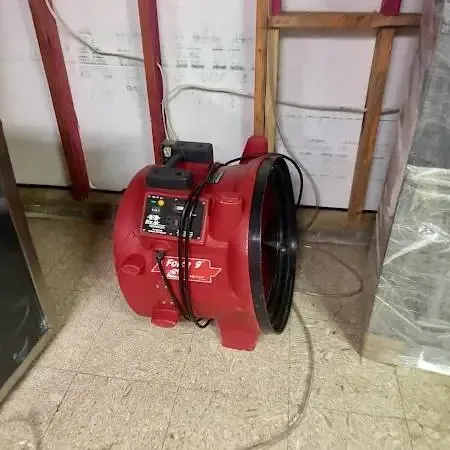
- Air movers and dehumidifiers run until readings match a dry reference spot in the same house.
- The crew rechecks the slab and the bottom of the walls before any flooring goes back down.
Flooring over a slab
The surface above the concrete decides how much can be saved.
Carpet and pad
Pad holds water like a sponge and is usually discarded. Carpet can sometimes be cleaned and dried if the water was clean and the leak was caught early.
Wood, laminate and tile
Boards cup when moisture from the slab rises into them. Readings decide whether mat systems can dry the wood in place, and the hardwood floor water damage service covers that call.
Tile often survives, but the grout, the backer board and the slab below it still need to dry before anything is sealed.
Safety and shutoff while waiting for the plumber
If the meter confirms a leak, closing the main shutoff valve at the house stops new water from reaching the damaged pipe. The household then needs a plan for drinking water, toilets and appliances until the repair is finished.
Water under a floor can reach outlets and baseboard wiring. If the leak is large or the floor is soaked near electrical devices, shutting off power to that area at the panel is the safer choice.
- Turn off the water heater if the main is shut off, so it does not heat an empty tank.
- Move furniture and boxes off wet carpet, and set foil or blocks under heavy furniture legs.
- Pull up area rugs and runners so they do not trap moisture against the floor.
- Photograph damp spots, the meter reading and the date before any work starts.
Plan the repair and the drying together
A plumber can repair the pipe in place, reroute it through a wall or the attic, or replace the whole run. Each choice decides where floors and walls get opened.
Sharing that plan with the drying team avoids opening the same area twice. A slab that is closed up wet can hold moisture long after the repair is finished.
The structural drying step is what brings the slab and the wall bottoms back to a normal reading. The photos, readings and dates gathered along the way also support an insurance claim, so the household keeps them in one folder.
Questions
Can a slab leak go unnoticed for a long time?
Yes. Water can run under the concrete for weeks without a stain on the surface. A rising water bill or a meter that keeps moving deserves attention even when the floors look fine.
Does a warm floor always mean a slab leak?
No. Sun through a window or a heating system can warm a floor too. A warm spot together with the sound of water or a moving meter is the combination worth checking.
Does the whole slab need to be dried?
Only the wet part. Moisture readings show how far the water spread, and the drying focuses on those areas and the walls beside them.
Who finds the leak, a plumber or a restoration crew?
A plumber or leak detection specialist locates and repairs the pipe. The restoration crew handles the water damage, the drying and the readings.
Is a slab leak covered by homeowners insurance?
It depends on the policy and the cause. Many policies treat the resulting water damage differently from the cost of reaching and repairing the pipe, so reading the policy or asking the insurer is the safe step.
What happens to the flooring if the slab stays wet?
Moisture keeps moving up into carpet, pad, wood or laminate. Boards cup, adhesives let go and the damp conditions beside drywall can support mold, so slab moisture is dried before new flooring goes in.